Pubblicato su Results in Engineering, lo studio coordinato d Giovanni Vozzi
Leggi tutto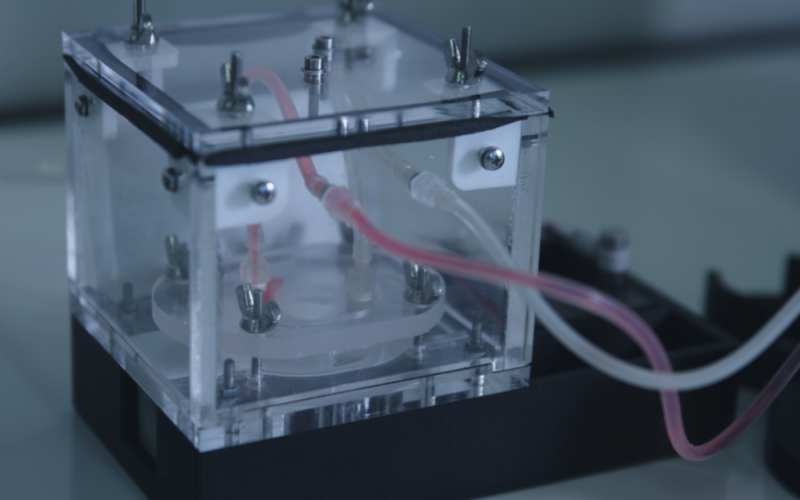



Scientific Coordinators
Nicola Vanello and Riccardo Costanzi hc_ict_summerschool@dii.unipi.it
Operational Manager
Corinna Caporali hc_ict_summerschool@dii.unipi.it
Summer/Winter School Office support.summerschool@unipi.it
The Summer School “Human-Centric ICT for Industry 5.0”, organised by the University of Pisa within the FoReLab project, offers an intensive one-week programme of 30 hours of lectures and 12 hours of collaborative project work on the ICT technologies enabling the transition from Industry 4.0 to Industry 5.0, with the person — operator, user, or patient — placed at the centre of the design process. The programme spans Artificial Intelligence and Large Language Models, affective computing (now strengthened by a dedicated component on speech analysis for emotion and mood recognition), collaborative robotics and shared autonomy, RFID for localisation and sensing, AR/MR for training, 5G/6G telecommunications, assistive technologies, and One Health principles in engineering design. Theory is combined with two hands-on laboratory sessions — one on RFID systems for workplace safety, and one on shared-autonomy teleoperation of a Franka Emika Panda robot using webcam-based hand tracking — and with a collaborative project work in which students, organised into multidisciplinary task forces with defined managerial roles (CTO, COO, Sustainability, HR, CEO), analyse realistic industrial scenarios and design human-centric innovation strategies to be pitched before the faculty. A distinctive feature of the school is the active participation of industry representatives (including Baker Hughes and Linfa Digitale), who share first-hand experience on how human-centric technologies are implemented in real production contexts, bridging academic research and industrial practice.
Students interested in earning the 6 ECTS credits are required to agree with the Summer School coordinators on a Project Work topic, and then submit their written report by email.
The Summer School will be activated with at least 20 students. The maximum number of participants is set to 45 students.
Lectures and project teamwork will take place in Pisa, School of Engineering, Largo Lucio Lazzarino 1
The program will be activated also in distance learning mode (TEAMS platform).
By the end of the school, participants will have acquired an integrated and up-to-date overview of the ICT technologies enabling the transition to Industry 5.0, together with cross-disciplinary competences ranging from the design of human-in-the-loop systems to the analysis of the socio-organisational impact of technological innovations, and the ability to translate technological opportunities into concrete, sustainable business strategies
The programme covers the main ICT enabling technologies for Industry 5.0 in a cross-disciplinary way, including:
Complementing the theoretical lectures, the Summer School includes two hands-on practical sessions that allow participants to directly experience some of the technologies studied:
An integral and distinctive component of the school is the collaborative project work entitled “From technology to strategy: designing human-centric innovation”. Participants, organised into multidisciplinary “company innovation task forces” of 4–5 people, take on specific managerial roles — CTO, COO, Sustainability & Compliance Manager, HR & Change Manager, CEO/Strategy Lead — and are asked to analyse realistic industrial scenarios (traditional food manufacturing, Tier 2 automotive, public healthcare, sustainable logistics) in order to design innovative solutions based on the technologies presented during the week.
The pathway is structured in four phases: context analysis, technology selection, design of an implementation roadmap, and a final pitch before the faculty. This approach enables participants to integrate technical competences with a strategic perspective, simultaneously considering technological feasibility, return on investment, ESG impact, and workforce acceptance.
Contribution from Industry
A distinctive feature of the school is the active participation of industry representatives, who join the academic faculty bringing first-hand testimonies from the field. Contributions include, among others, Baker Hughes on systems engineering as a practice for designing human-in-the-loop strategies, and Linfa Digitale S.r.l. on the state of the art of Industry 4.0 and the challenges of Industry 5.0 adoption. This cross-fertilisation between academic research and industrial experience offers participants a concrete perspective on how human-centric technologies are actually implemented in real production contexts.
Being a university student (Master or PhD) or having a University degree in the field of STEM (Science, Technology, Engineering, Management) disciplines.
All the documents must be in pdf format, in order to upload them on the portal when required.
Application has to be submitted via Alice portal following the instructions of the “How to apply” page.
Tuition fees: 500€
Pay fees by Debit/Credit Card or PayPal online using the following Payment Form
NOTICE:
REFUND POLICY:
There will be no refund of paid tuition fees
| Allegato | Dimensione |
|---|---|
 Programme_Draft.pdf Programme_Draft.pdf | 65.86 KB |
Pubblicato su Results in Engineering, lo studio coordinato d Giovanni Vozzi
Leggi tutto
Dipartimento di Ingegneria dell'Informazione
Via G. Caruso 16 - 56122 - Pisa
Tel +39 050 2217511 - info@dii.unipi.it
PEC: ing.informazione@pec.unipi.it
Info Didattica: didattica@dii.unipi.it
P.I. 00286820501 - C.F. 80003670504